
Showing posts with label Trump Shit. Show all posts
Showing posts with label Trump Shit. Show all posts
Wednesday, March 6, 2019
Why Donald Trump Could Win Again
From Dave Eggers at the Guardian, quite a grimly riveting (and very long) look at Trump's actual appeal (via one of his rallies in El Paso, Texas). Eggers doesn't offer happy news, but I think it's a piece that needs to be read. Below is the beginning section and then a few random paragraphs that particularly caught my attention. Tom
"At the end of Trump rallies, order breaks down and people are tired. To those seeking to shock, injure, annoy or make a point, it’s go time. In El Paso, on the US’s southern border, at Trump’s first campaign-style rally of 2019, two people unfurled the flag of the Soviet Union.
"This happened inside the El Paso County Coliseum. I was outside in the parking lot, with about seven thousand others, shivering in the frigid desert night. Inside, Trump was winding down his speech and people were leaving. Suddenly there was a commotion at the exit. A pair of young people wearing black were hurrying out of the building, holding the large Soviet flag, being chased by a pack – a posse – of cowboys. I have seen some curious things at Trump rallies, but none stranger than the sight of four cowboys running after two people carrying a giant red USSR flag, hammer and sickle and all, through a parking lot in El Paso.
"When I say cowboy I mean cowboy. Though we were deep in Texas, only a few in Trump’s audience were wearing cowboy hats, or adhered in any way to our mental picture of a cowboy. But these four young men did. They were clean-shaven and short-haired, they wore cowboy hats and cowboy boots and snug unfaded Levis. They ran after the Soviet flag-bearers, trying to grab it and in that way – I presume – sap it of its awesome power. But the communist sympathisers were fast and crafty. They weaved through the crowd with alacrity, while the cowboys moved awkwardly, their cowboy boots a bit too stiff and their pants a bit too snug.
"A swarm of rally attendees followed the melee with their blue-lit phones. Soon a trio of police officers entered the picture. Two of them slowed the cowboys, allowing the communists to leave the parking lot. “USA! USA!” the cowboys chanted to the disappearing flag-bearers, and much of the crowd joined in.
"It was a spectacle at the end of a long night, and it briefly enlivened the crowd outside – who showed up too late to get a spot inside the warm Coliseum and thus had to watch Trump’s speech on a giant screen in the cold. It was one of so many unexpected happenings that day in Texas, but at least cowboys v communists we can understand.
"This was 11 February 2019. A week before, Trump had given his State of the Union address, in which he made his case for the wall and painted a dubious picture of El Paso as a lawless city, which had become safe and prosperous after a wall had been constructed in 2009, separating it from Mexico. Many El Pasoans, including Mayor Dee Margo, objected to this characterization, citing statistics that disproved Trump’s statements, but Trump did not correct himself and did not back down.
"Instead, he took his case to El Paso, a city that shares a vast symbiotic metropolitan area with Ciudad Juárez in Mexico and bills itself as the largest binational urban area in the world. El Paso’s population is 80% Hispanic, and is considered a Democratic stronghold. The city’s most famous politician is Beto O’Rourke, the former congressman who unsuccessfully ran for Senate against Ted Cruz –but in the process gained a national following and has been considered a viable candidate for president. O’Rourke is young – 46 – and eloquent, and has the kind of charisma that brings to mind JFK and RFK and Obama. With his thick salt-and-pepper hair and lanky athleticism, he looks like he’s fallen from a bough of the Kennedy tree. He had decided to hold a counter-rally directly coinciding with Trump’s speech.
"It was Trump’s first rally since he was soundly defeated in the game of shutdown chicken he played with Nancy Pelosi in December and January. Holding a rally head-to-head with O’Rourke, in O’Rourke’s backyard, after insulting the city of El Paso on national television, seemed like a very bad idea in every possible way. But Trump has always done the wrong thing and has usually been rewarded for it. So that we can explain.
"But how to explain that about half of Trump’s audience that night in El Paso were people of colour, most of them Latino? How to explain the fact that Trump attracted 15,000 supporters to his rally, while O’Rourke garnered only 4,000 people to his event, held in his hometown, on the same evening? How to explain the thousands of Trump supporters who held signs – given to them when they entered the Coliseum – that read “Finish the Wall”, when Trump has not yet begun any construction on said wall? And how to explain the Trump campaign’s decision to follow his speech with the Rolling Stones’s “You Can’t Always Get What You Want?”
"El Paso is a bustling city surrounded by desert, everywhere touched by white dust and bright sun. In the morning, I watched the area around the Coliseum, as early arrivals to the rally parked their cars. Their licence plates read Arizona, New Mexico, Pennsylvania, even Florida. One giant RV arrived bearing every flag made to celebrate Trump, Pence and the making great of America again. These fans, who started lining up at 9am for a rally scheduled to begin at 7pm, were the kinds of people we assume Trump attracts: that is, white people.
"The Coliseum, less than a mile from the Mexico border, is near a working-class neighbourhood of small ranch houses, and many of them had opened their driveways and yards to attendees’ cars, generally charging $10 for parking. As the day went on, I stood at the corner of Paisano and Shelter, where the rally-goers had to pass on their way to get in line outside the Coliseum, and the crowds arriving defied all expectations. There were Latino families. There were African Americans. There were biracial couples. Young South Asians and Pacific Islanders. About half of the people rushing to get in the long line that stretched far down Paisano were people of colour. A good third of them were under 30.
"As I watched the line grow, I met two T-shirt vendors who had parked their carts, full of Trump hats, hoodies and pins, in the path of the attendees. Angel Gaudet and Skaheen Thompson, both from South Carolina, have been following Trump to his rallies since his 2016 campaign. Gaudet and Thompson don’t work together, but have seen each other on the trail and consider themselves friendly competitors. And since Trump announced his candidacy, business has been good. Selling Trump gear – especially MAGA hats, which they say are by far the bestselling item – they can make as much as $2,300 in one day.
"Over the past few years, they have become Trump supporters, but have nuanced views about him and his policies. “I like that he makes it happen,” Gaudet said. She is white, wore a pink hoodie and her hair was dyed green. She spoke with a drowsy, raspy drawl. “His mouth, his overall attitude, is fucked up,” she continued, “how he talks about people or to people sometimes. Sometimes I guess he gets caught up like anybody else. But overall he’s like, ‘If you ain’t for us, then we ain’t for you. Get the fuck on.’ You know what I mean?”
“I love that,” said Thompson. “He’s for America 100%. It’s America or no way. I love that.” Thompson is an African American man in his early 20s. He was wearing a camouflage shirt under black overalls, with a large pin on his chest depicting a cartoon boy – a mashup of Calvin from Calvin and Hobbes and Trump himself – urinating on the CNN logo.
"People continued to walk past us en route to the rally. Mothers and daughters in University of Texas-El Paso sweatshirts. A man wearing an Uncle Sam costume. Groups of young men and groups of young women, and couples holding hands and dressed up as if the rally were a night on the town. A middle-aged blond woman rushed by in a head-to‑toe suede outfit, fringes flying as she crossed the street, the lights of the Coliseum beckoning.
“I really think Trump can help put order in this world,” Gaudet said. “Because right now it’s just a mess. And I think he can do that because of his attitude. He just, he don’t give a damn if the next person gets mad or not. As far as becoming a president and putting shit in order, I think he could be that dude to put shit in order.”
"A man walked by wearing a sleeveless denim jacket with a rendering of a grim reaper on the back. The staff of the reaper’s scythe was an AK-47, the blade an American flag. He stopped briefly to inspect the merchandise. I asked Gaudet and Thompson how, as self-employed entrepreneurs, they got their healthcare.
“Right now I don’t even have healthcare,” Thompson said.
“I go to the emergency room,” Gaudet said, laughing.
“I just go to the emergency room,” Thompson agreed.
"I asked if they would support higher taxes for millionaires if it meant that people like them would get free healthcare. Gaudet didn’t hesitate. “No, because one day we might be the millionaires....”
"....Ted Cruz finished his brief speech and introduced Donald Trump – the crowd roared at those two words – Jr. There was momentary deflation but then real enthusiasm as Trump Jr appeared to Neil Young’s “Rockin’ in the Free World”, a song most assuredly not authorised to be played at a Trump rally. Now sporting a beard, Trump Jr mentioned that he had just been in Texas a week before, on a hunting trip with friends. The crowd loved it. He denigrated socialism and the crowd loved it. His stage presence and comfort behind the microphone were remarkable, and portend trouble for those opposed to all that Trumpism represents, for it’s obvious that Trump Jr could run for office in Texas, and many other states, and win. He would trounce Cruz or John Cornyn in a primary. He is young, he shoots guns, kills animals, and has the same arrogant charisma as his father. He worked the crowd masterfully and, unlike his father, he is concise and disciplined on stage. Those worried about a Trump dynasty continuing with Ivanka should look beyond her to Donald Trump Jr. He has said and tweeted countless xenophobic and plainly ignorant things but, unlike his sister, he leans into controversy, not away from it. He has fire in his belly and seems to be enjoying his notoriety more every day...."
"When O’Rourke spoke, he was eloquent and passionate about American immigration and the unique ways that El Paso has historically coexisted with Mexico. There was no teleprompter visible, no notes, no podium even, and yet he strung together sentences startling in their lyricism. He noted the little known but remarkable fact that the border cities of the US, San Diego and El Paso among them, are among the safest large cities in the country – safer than interior cities such as Chicago, Detroit and St Louis. “El Paso,” he said, “has been the safest city in the United States of America, not in spite of the fact that we are a city of immigrants, but because we are a city of immigrants.”
"Periodically he translated his own speech into Spanish, and though he spoke beautifully to a rapt audience, and though his case was utterly convincing, the verdict of the night had already been made, and O’Rourke had lost. Across the street, Trump had come to O’Rourke’s backyard and had attracted a crowd at least four times larger. And when O’Rourke was finished, and his audience had left the field, Trump was still going strong at the Coliseum...."


Sunday, December 10, 2017
More on the shrinking of Bears Ears National Monument by the Supreme Piece of Shit Donald Trump
Follow the money. Here's a good start to R&D (reading and downloading [into one's brain]) on the subject of "more on the shrinking of bears ears national monument by the supreme piece of shit donald trump"
Scroll down below the video for the links...the WaPo article is obviously superb...by Juliet Eilperin
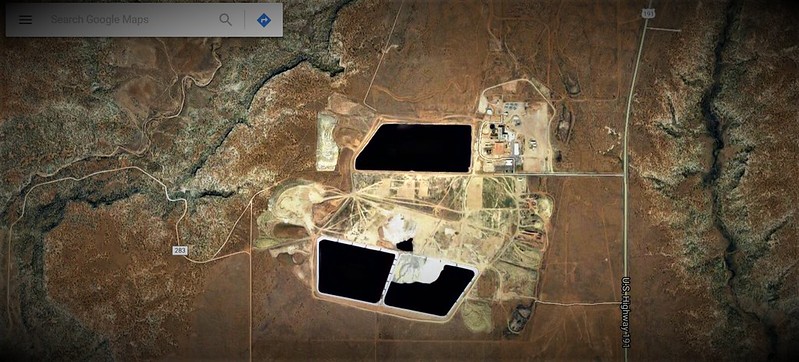
Across the Colorado Plateau, irresponsibly operated uranium mills have devastated landscapes and communities including Moab and Monticello, Utah. The Trust is currently working to prevent another chapter of this toxic legacy from occurring at White Mesa. Located just three miles from the Ute Mountain Ute Tribe’s White Mesa community on Highway 191, between Bluff and Blanding, the White Mesa Uranium Mill processes uranium from mines across the Colorado Plateau as well as radioactive waste imported from toxic sites across North America.
The White Mesa Uranium Mill is the United States' only operating conventional uranium mill, but it's owned and operated by Energy Fuels Inc., a Canadian corporation.
Washington Post Article by Juliet Eilperin:
https://goo.gl/z1GRrf
Grand Canyon Trust White Mesa Mill (in Blanding, Utah) Project Page:
https://www.grandcanyontrust.org/white-mesa-uranium-mill
Wiki page on Uranium Mining:
https://en.wikipedia.org/wiki/Uranium_mining
Energy Fuels, Inc. 2016 Annual Report SEC Form 10-K:
http://www.energyfuels.com/wp-content/uploads/2017/03/2016.12.31-10K-FINAL-Reduced-Size.pdf
Energy Fuels, Inc. Website:
http://www.energyfuels.com/
#BearsEarsNationalMonument
#BearsEars
#DonaldTrumpShrinksBearsEars
#EnergyFuelsInc
#UraniumMining
#BlandingUtah
#NuclearPower
#NuclearPowerPlants
#OpenPitMining
#NuclearWaste
#FuckTrump
#POTUS
#POTUS45
#WaPo
#WashingtonPost
#JulietEilperin
Scroll down below the video for the links...the WaPo article is obviously superb...by Juliet Eilperin
Across the Colorado Plateau, irresponsibly operated uranium mills have devastated landscapes and communities including Moab and Monticello, Utah. The Trust is currently working to prevent another chapter of this toxic legacy from occurring at White Mesa. Located just three miles from the Ute Mountain Ute Tribe’s White Mesa community on Highway 191, between Bluff and Blanding, the White Mesa Uranium Mill processes uranium from mines across the Colorado Plateau as well as radioactive waste imported from toxic sites across North America.
The White Mesa Uranium Mill is the United States' only operating conventional uranium mill, but it's owned and operated by Energy Fuels Inc., a Canadian corporation.
Half Life: America's Last Uranium Mill from Grand Canyon Trust on Vimeo.
Washington Post Article by Juliet Eilperin:
https://goo.gl/z1GRrf
Grand Canyon Trust White Mesa Mill (in Blanding, Utah) Project Page:
https://www.grandcanyontrust.org/white-mesa-uranium-mill
Wiki page on Uranium Mining:
https://en.wikipedia.org/wiki/Uranium_mining
Energy Fuels, Inc. 2016 Annual Report SEC Form 10-K:
http://www.energyfuels.com/wp-content/uploads/2017/03/2016.12.31-10K-FINAL-Reduced-Size.pdf
Energy Fuels, Inc. Website:
http://www.energyfuels.com/
#BearsEarsNationalMonument
#BearsEars
#DonaldTrumpShrinksBearsEars
#EnergyFuelsInc
#UraniumMining
#BlandingUtah
#NuclearPower
#NuclearPowerPlants
#OpenPitMining
#NuclearWaste
#FuckTrump
#POTUS
#POTUS45
#WaPo
#WashingtonPost
#JulietEilperin
Thursday, December 8, 2016
US Power Will Decline Under Trump, Says Futurist Who Predicted Soviet Collapse :: Written by NAFEEZ AHMED for Motherboard
Motherboard
US Power Will Decline Under Trump, Says Futurist Who Predicted Soviet Collapse
Written by
NAFEEZ AHMED
COLUMNIST
December 6, 2016 // 09:30 AM EST
COPY THIS URL
Johan Galtung, a Nobel Peace Prize-nominated sociologist who predicted the collapse of the Soviet Union, warned that US global power will collapse under the Donald Trump administration.
The Norwegian professor at the University of Hawaii and Transcend Peace University is recognized as the ‘founding father’ of peace and conflict studies as a scientific discipline. He has made numerous accurate predictions of major world events, most notably the collapse of the Soviet Empire.
Back in 2000, Galtung first set out his prediction that the “US empire” would collapse within 25 years.
Galtung has also accurately predicted the 1978 Iranian revolution; the Tiananmen Square uprising of 1989 in China; the economic crises of 1987, 2008 and 2011; and even the 9/11 attacks—among other events, according to the late Dietrich Fischer, academic director of the European University Center for Peace Studies.
Back in 2000, Galtung first set out his prediction that the “US empire” would collapse within 25 years. After the election of President Bush, though, he revised that forecast five years forward because, he argued, Bush’s policies of extreme militarism would be an accelerant.
After the election of Trump, I thought it might be prudent to check in with Galtung to see how he was feeling about the status of his US forecast. Galtung told Motherboard that Trump would probably continue this trajectory of accelerated decline—and may even make it happen quicker. Of course, with typical scientific caution, he said he would prefer to see what Trump’s actual policies are before voicing a clear verdict.
The model
Galtung has doctoral degrees in both sociology and mathematics, and some decades ago developed a theory of “synchronizing and mutually reinforcing contradictions”, which he used to make his forecasts. The model was based on comparing the rise and fall of 10 historical empires.
In 1980, Galtung used his theoretical model to map the interaction of various social contradictions inside the Soviet empire, leading him to predict its demise within 10 years.
“Very few believed him at the time”, writes Dietrich Fischer in the main biography and anthology of Galtung’s works, Pioneer for Peace, “but it occurred on November 9, 1989, two months before his time limit, 1990.”
For the USSR, Galtung’s model identified five key structural contradictions in Soviet society which, he said, would inevitably lead to its fragmentation—unless the USSR underwent a complete transformation.
The model works like this: the more those contradictions deepen, the greater the likelihood they will result in a social crisis that could upend the existing order.
In the case of the USSR, the main structural contradictions were as follows: the working class was increasingly repressed and unable to self-organise through trade unions (ironic given the country’s Communist pretensions); the wealthier ‘bourgeoisie’ or elite had money to spend, but nothing to buy from domestic production, leading to economic stagnation; Russian intellectuals wanted more freedom of expression; minorities wanted more autonomy; and peasants wanted more freedom of movement
The model works like this: the more those contradictions deepen, the greater the likelihood they will result in a social crisis that could upend the existing order.
Eventually, as the highly centralised structures of the Soviet empire were unable to accommodate these intensifying pressures, the top-down structures would have to collapse.
Galtung later began to apply his model to the United States. In 1996, he wrote a scientific paper published by George Mason University’s Institute for Conflict Analysis & Resolution warning that “the USA will soon go the same way as [previous] imperial constructions… decline and fall.”
Fascism?
But the main book setting out Galtung’s fascinating forecast for the US is his 2009 book, The Fall of the American Empire—and then What?
The book sets out a whopping 15 “synchronizing and mutually reinforcing contradictions” afflicting the US, which he says will lead to US global power ending by 2020—within just four years. Galtung warned that during this phase of decline, the US was likely to go through a phase of reactionary “fascism”.
He argued that American fascism would come from a capacity for tremendous global violence; a vision of American exceptionalism as the “fittest nation”; a belief in a coming final war between good and evil; a cult of the strong state leading the fight of good against evil; and a cult of the “strong leader”.
Galtung warned that during this phase of decline, the US was likely to go through a phase of reactionary “fascism”.
All of which, Galtung said, surfaced during the Bush era, and which now appear to have come to fruition through Trump. Such fascism, he told Motherboard, is a symptom of the decline—lashing out in disbelief at the loss of power.
Among the 15 structural contradictions his model identifies as driving the decline, are:
economic contradictions such as ‘overproduction relative to demand’, unemployment and the increasing costs of climate change;
military contradictions including rising tensions between the US, NATO, and its military allies, along with the increasing economic unsustainability of war;
political contradictions including the conflicting roles of the US, UN and EU;
cultural contradictions including tensions between US Judeo-Christianity, Islam, and other minorities;
and social contradictions encompassing the increasing gulf between the so-called ‘American Dream’, the belief that everyone can prosper in America through hard work, and the reality of American life (the fact that more and more people can’t).
Galtung’s book explores how the structural inability to resolve such contradictions will lead to the unravelling of US political power, both globally, and potentially even domestically.
Global collapse
Trump has made clear that he thinks US troops are still needed in Iraq and Afghanistan, and even proposed sending more troops to Iraq. He also said that we should have ‘grabbed’ the country’s oil. But he has also heavily (and incoherently) criticized US military policies.
Domestically, Trump has promised to deport 11 million illegal migrants, build a wall between the US and Mexico, compel all American Muslims to sign up to a government register, and ban all Muslim immigration to the US.
On the one hand, Trump might well offer an opportunity to avoid potential conflicts with great power rivals like Russia and China—on the other, he may still, stupidly, fight more unilateral wars and worsen domestic contradictions relating to minorities.
For Galtung, Trump’s incoherent policy proposals are evidence of the deeper structural decline of US power: “He [Trump] blunts contradictions with Russia, possibly with China, and seems to do also with North Korea. But he sharpens contradictions inside the USA”, such as in relation to minority rights.
On the one hand, Galtung said, Trump might well offer an opportunity to avoid potential conflicts with great power rivals like Russia and China—on the other, he may still, stupidly, fight more unilateral wars and worsen domestic contradictions relating to minorities.
Motherboard asked Galtung whether he thinks Trump would speed up his forecast of “collapse”, or slow it down.
Even if we give Trump the benefit of the doubt, he said, and assume that he “prefers solving underlying conflicts, particularly with Russia, to war—in other words for the US not be imperial—then yes, that still speeds up the decline from above, and from the center… Of course, what he does as a President remains to be seen.”
But what exactly is collapsing?
“An empire is more than violence around the world,” said Galtung. “It is a cross-border structure with a center, the imperial country, and a periphery, the client countries. The point about imperialism is to make the elites in the periphery do the jobs for the center.”
The center country may be a dictatorship or a democracy. So for Galtung, the collapse of the US empire comes “when the periphery elites no longer want to fight US wars, no longer want to exploit for the center.”
For Galtung, a key sign of collapse would be Trump’s attitude to NATO. The President-elect has said he would be happy to see NATO break-up if US allies aren’t willing to pay their dues. Trump’s ‘go it alone’ approach would, Galtung said, accelerate and undermine US global empire at the same time.
“The collapse has two faces,” said Galtung. “Other countries refuse to be ‘good allies: and the USA has to do the killing themselves, by bombing from high altitudes, drones steered by computer from an office, Special Forces killing all over the place. Both are happening today, except for Northern Europe, which supports these wars, for now. That will probably not continue beyond 2020, so I stand by that deadline.”
US break-up?
But this global collapse, also has potential domestic implications. Galtung warned that the decline of American power on the world stage would probably have a domestic impact that would undermine the internal cohesion of the United States:
“As a trans-border structure the collapse I am thinking of is global, not domestic. But it may have domestic repercussion, like white supremacists or even minorities like Hawaiians, Inuits, indigenous Americans, and black Americans doing the same, maybe arguing for the United States as community, confederation rather than a ‘union’.”
Galtung warned that the decline of American power on the world stage would probably have a domestic impact that would undermine the internal cohesion of the United States.
Galtung is not pessimistic about his forecasts, though. Having always seen the collapse of the “US empire” as inevitable—much like the collapse of the Soviet empire—he argues that there is real opportunity for a revitalization of the “American republic.”
The American republic is characterised by its dynamism, its support for the ideals of freedom and liberty, its productivity and creativity, and its cosmopolitanism toward the ‘other.’
Might Trump help revitalize the American republic?
Galtung’s answer is, perhaps, revealing: “If he manages to apologize deeply to all the groups he has insulted. And turn foreign policy from US interventions—soon 250 after Jefferson in Libya 1801—and not use wars (killing more than 20 million in 37 countries after 1945): A major revitalization! Certainly making ‘America Great Again’. We’ll see.”
That’s a big if.
Get six of our favorite Motherboard stories every day by signing up for our newsletter.
TOPICS: Trumped, Johan Galtung, sociology, predictions, futurist, Donald Trump, US Power
US Power Will Decline Under Trump, Says Futurist Who Predicted Soviet Collapse
Written by
NAFEEZ AHMED
COLUMNIST
December 6, 2016 // 09:30 AM EST
COPY THIS URL
Johan Galtung, a Nobel Peace Prize-nominated sociologist who predicted the collapse of the Soviet Union, warned that US global power will collapse under the Donald Trump administration.
The Norwegian professor at the University of Hawaii and Transcend Peace University is recognized as the ‘founding father’ of peace and conflict studies as a scientific discipline. He has made numerous accurate predictions of major world events, most notably the collapse of the Soviet Empire.
Back in 2000, Galtung first set out his prediction that the “US empire” would collapse within 25 years.
Galtung has also accurately predicted the 1978 Iranian revolution; the Tiananmen Square uprising of 1989 in China; the economic crises of 1987, 2008 and 2011; and even the 9/11 attacks—among other events, according to the late Dietrich Fischer, academic director of the European University Center for Peace Studies.
Back in 2000, Galtung first set out his prediction that the “US empire” would collapse within 25 years. After the election of President Bush, though, he revised that forecast five years forward because, he argued, Bush’s policies of extreme militarism would be an accelerant.
After the election of Trump, I thought it might be prudent to check in with Galtung to see how he was feeling about the status of his US forecast. Galtung told Motherboard that Trump would probably continue this trajectory of accelerated decline—and may even make it happen quicker. Of course, with typical scientific caution, he said he would prefer to see what Trump’s actual policies are before voicing a clear verdict.
The model
Galtung has doctoral degrees in both sociology and mathematics, and some decades ago developed a theory of “synchronizing and mutually reinforcing contradictions”, which he used to make his forecasts. The model was based on comparing the rise and fall of 10 historical empires.
In 1980, Galtung used his theoretical model to map the interaction of various social contradictions inside the Soviet empire, leading him to predict its demise within 10 years.
“Very few believed him at the time”, writes Dietrich Fischer in the main biography and anthology of Galtung’s works, Pioneer for Peace, “but it occurred on November 9, 1989, two months before his time limit, 1990.”
For the USSR, Galtung’s model identified five key structural contradictions in Soviet society which, he said, would inevitably lead to its fragmentation—unless the USSR underwent a complete transformation.
The model works like this: the more those contradictions deepen, the greater the likelihood they will result in a social crisis that could upend the existing order.
In the case of the USSR, the main structural contradictions were as follows: the working class was increasingly repressed and unable to self-organise through trade unions (ironic given the country’s Communist pretensions); the wealthier ‘bourgeoisie’ or elite had money to spend, but nothing to buy from domestic production, leading to economic stagnation; Russian intellectuals wanted more freedom of expression; minorities wanted more autonomy; and peasants wanted more freedom of movement
The model works like this: the more those contradictions deepen, the greater the likelihood they will result in a social crisis that could upend the existing order.
Eventually, as the highly centralised structures of the Soviet empire were unable to accommodate these intensifying pressures, the top-down structures would have to collapse.
Galtung later began to apply his model to the United States. In 1996, he wrote a scientific paper published by George Mason University’s Institute for Conflict Analysis & Resolution warning that “the USA will soon go the same way as [previous] imperial constructions… decline and fall.”
Fascism?
But the main book setting out Galtung’s fascinating forecast for the US is his 2009 book, The Fall of the American Empire—and then What?
The book sets out a whopping 15 “synchronizing and mutually reinforcing contradictions” afflicting the US, which he says will lead to US global power ending by 2020—within just four years. Galtung warned that during this phase of decline, the US was likely to go through a phase of reactionary “fascism”.
He argued that American fascism would come from a capacity for tremendous global violence; a vision of American exceptionalism as the “fittest nation”; a belief in a coming final war between good and evil; a cult of the strong state leading the fight of good against evil; and a cult of the “strong leader”.
Galtung warned that during this phase of decline, the US was likely to go through a phase of reactionary “fascism”.
All of which, Galtung said, surfaced during the Bush era, and which now appear to have come to fruition through Trump. Such fascism, he told Motherboard, is a symptom of the decline—lashing out in disbelief at the loss of power.
Among the 15 structural contradictions his model identifies as driving the decline, are:
economic contradictions such as ‘overproduction relative to demand’, unemployment and the increasing costs of climate change;
military contradictions including rising tensions between the US, NATO, and its military allies, along with the increasing economic unsustainability of war;
political contradictions including the conflicting roles of the US, UN and EU;
cultural contradictions including tensions between US Judeo-Christianity, Islam, and other minorities;
and social contradictions encompassing the increasing gulf between the so-called ‘American Dream’, the belief that everyone can prosper in America through hard work, and the reality of American life (the fact that more and more people can’t).
Galtung’s book explores how the structural inability to resolve such contradictions will lead to the unravelling of US political power, both globally, and potentially even domestically.
Global collapse
Trump has made clear that he thinks US troops are still needed in Iraq and Afghanistan, and even proposed sending more troops to Iraq. He also said that we should have ‘grabbed’ the country’s oil. But he has also heavily (and incoherently) criticized US military policies.
Domestically, Trump has promised to deport 11 million illegal migrants, build a wall between the US and Mexico, compel all American Muslims to sign up to a government register, and ban all Muslim immigration to the US.
On the one hand, Trump might well offer an opportunity to avoid potential conflicts with great power rivals like Russia and China—on the other, he may still, stupidly, fight more unilateral wars and worsen domestic contradictions relating to minorities.
For Galtung, Trump’s incoherent policy proposals are evidence of the deeper structural decline of US power: “He [Trump] blunts contradictions with Russia, possibly with China, and seems to do also with North Korea. But he sharpens contradictions inside the USA”, such as in relation to minority rights.
On the one hand, Galtung said, Trump might well offer an opportunity to avoid potential conflicts with great power rivals like Russia and China—on the other, he may still, stupidly, fight more unilateral wars and worsen domestic contradictions relating to minorities.
Motherboard asked Galtung whether he thinks Trump would speed up his forecast of “collapse”, or slow it down.
Even if we give Trump the benefit of the doubt, he said, and assume that he “prefers solving underlying conflicts, particularly with Russia, to war—in other words for the US not be imperial—then yes, that still speeds up the decline from above, and from the center… Of course, what he does as a President remains to be seen.”
But what exactly is collapsing?
“An empire is more than violence around the world,” said Galtung. “It is a cross-border structure with a center, the imperial country, and a periphery, the client countries. The point about imperialism is to make the elites in the periphery do the jobs for the center.”
The center country may be a dictatorship or a democracy. So for Galtung, the collapse of the US empire comes “when the periphery elites no longer want to fight US wars, no longer want to exploit for the center.”
For Galtung, a key sign of collapse would be Trump’s attitude to NATO. The President-elect has said he would be happy to see NATO break-up if US allies aren’t willing to pay their dues. Trump’s ‘go it alone’ approach would, Galtung said, accelerate and undermine US global empire at the same time.
“The collapse has two faces,” said Galtung. “Other countries refuse to be ‘good allies: and the USA has to do the killing themselves, by bombing from high altitudes, drones steered by computer from an office, Special Forces killing all over the place. Both are happening today, except for Northern Europe, which supports these wars, for now. That will probably not continue beyond 2020, so I stand by that deadline.”
US break-up?
But this global collapse, also has potential domestic implications. Galtung warned that the decline of American power on the world stage would probably have a domestic impact that would undermine the internal cohesion of the United States:
“As a trans-border structure the collapse I am thinking of is global, not domestic. But it may have domestic repercussion, like white supremacists or even minorities like Hawaiians, Inuits, indigenous Americans, and black Americans doing the same, maybe arguing for the United States as community, confederation rather than a ‘union’.”
Galtung warned that the decline of American power on the world stage would probably have a domestic impact that would undermine the internal cohesion of the United States.
Galtung is not pessimistic about his forecasts, though. Having always seen the collapse of the “US empire” as inevitable—much like the collapse of the Soviet empire—he argues that there is real opportunity for a revitalization of the “American republic.”
The American republic is characterised by its dynamism, its support for the ideals of freedom and liberty, its productivity and creativity, and its cosmopolitanism toward the ‘other.’
Might Trump help revitalize the American republic?
Galtung’s answer is, perhaps, revealing: “If he manages to apologize deeply to all the groups he has insulted. And turn foreign policy from US interventions—soon 250 after Jefferson in Libya 1801—and not use wars (killing more than 20 million in 37 countries after 1945): A major revitalization! Certainly making ‘America Great Again’. We’ll see.”
That’s a big if.
Get six of our favorite Motherboard stories every day by signing up for our newsletter.
TOPICS: Trumped, Johan Galtung, sociology, predictions, futurist, Donald Trump, US Power
Subscribe to:
Posts (Atom)